
Occupational Therapy for Children: Benefits, Activities & Why It Matters for Your Child’s Development
Every child has their own way of learning, exploring, and understanding the world. Some children quickly learn to hold a pencil, dress themselves, climb stairs, or play with other children. Others may need a little more time, practice, and support to develop these everyday skills.
For parents, noticing these differences can sometimes bring questions and concerns. You may wonder why your child struggles to hold a spoon, avoids certain textures, finds it difficult to sit during activities, or needs help with simple daily tasks.
These challenges are not always easy to understand, but the right guidance can make a meaningful difference.
This is where Occupational Therapy for Children plays an important role. Occupational therapy helps children develop the skills they need to participate in everyday activities, become more independent, and feel confident in their abilities.
At Swasambhav Child Development Center, we believe that every child has unique strengths and developmental needs. Our focus is on understanding each child’s journey and supporting their progress through meaningful, child-focused therapy.
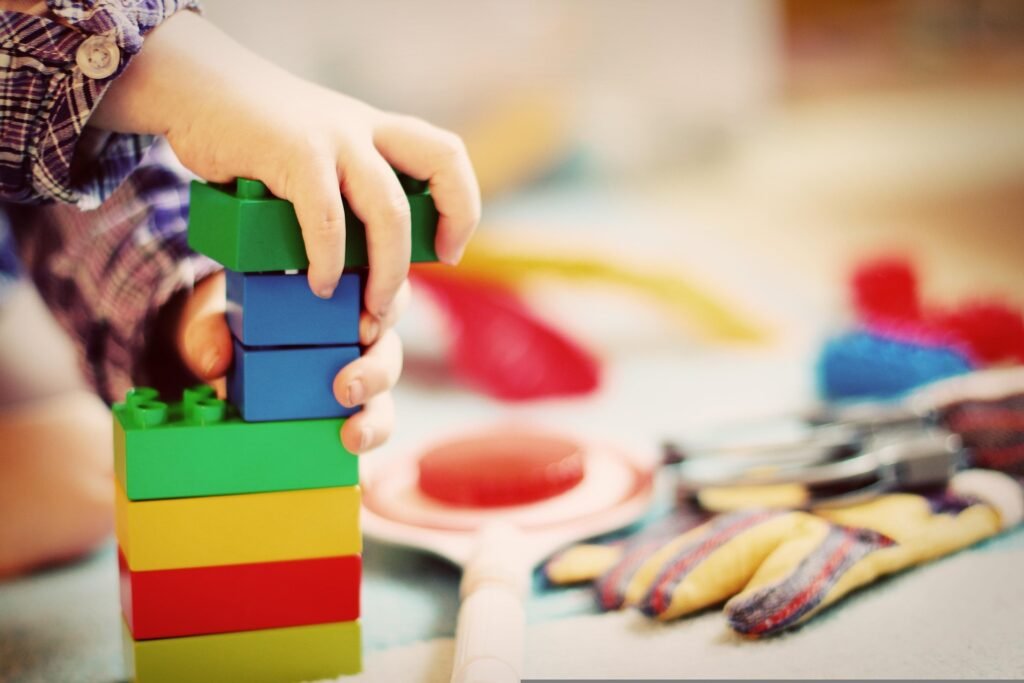
What Is Occupational Therapy for Children?
Occupational Therapy (OT) is a specialised healthcare service that helps individuals develop, improve, or maintain the skills needed for everyday life.
For children, these everyday activities include playing, eating, dressing, writing, learning, communicating, and interacting with others.
A child may have difficulty performing certain activities because of challenges related to motor development, sensory processing, coordination, attention, or functional skills. Occupational therapy focuses on understanding these difficulties and working on the underlying abilities.
For example, imagine a child who wants to draw but finds it difficult to hold a pencil properly. Instead of simply asking the child to practise writing repeatedly, an occupational therapist may work on finger strength, hand coordination, grip development, and visual-motor integration through enjoyable activities.
Similarly, a child who struggles with dressing may practise activities such as buttoning, pulling zippers, handling clothing, and coordinating both hands.
The goal is not just to complete an activity during therapy. It is to help children use these skills in their everyday lives, at home, in school, and while playing.
Why Might a Child Need Occupational Therapy?
Children develop at different rates, and not every developmental difference indicates a problem. However, when certain difficulties continue to affect a child’s daily routine, it may be helpful to seek professional guidance.
Parents may notice some of the following signs:
- Difficulty holding pencils, crayons, or small objects.
- Trouble using a spoon or fork independently.
- Difficulty buttoning clothes or wearing shoes.
- Poor balance or difficulty coordinating body movements.
- Avoiding messy play, certain textures, or particular sounds.
- Constantly seeking movement or having difficulty remaining engaged in activities.
- Difficulty completing age-appropriate puzzles or construction activities.
- Challenges with hand-eye coordination.
- Difficulty participating in classroom or play activities.
- Needing additional support with everyday self-care routines.
These signs do not automatically mean that a child needs therapy or has a developmental condition. Every child should be understood individually.
If you consistently notice that your child’s difficulties are affecting their participation in everyday activities, consulting a qualified occupational therapist can help you understand what support may be appropriate.
8 Important Benefits of Occupational Therapy for Children
Occupational therapy supports several areas of development. The specific benefits depend on the child’s individual needs, abilities, and therapy goals.
1. Improves Fine Motor Skills
Fine motor skills involve the small muscles of the hands and fingers. Children use these skills throughout the day, often without even realising it.
Holding a pencil, picking up small objects, turning pages, using scissors, buttoning clothes, and handling toys all require fine motor control.
Some children may find these activities challenging because they have difficulty with finger strength, hand coordination, or precise movements.
Occupational therapy uses activities such as:
- Pegboard exercises.
- Bead threading.
- Clay and play dough activities.
- Finger painting.
- Puzzle activities.
- Picking up and sorting small objects.
These activities encourage children to develop better hand control, finger strength, and coordination.
Over time, improved fine motor skills may make everyday tasks such as writing, drawing, eating, and dressing easier.
2. Develops Gross Motor Skills and Balance
Gross motor skills involve the larger muscles of the body. These skills help children walk, run, jump, climb, maintain posture, and participate in physical play.
Some children may appear clumsy, avoid climbing activities, struggle with balance, or find it difficult to coordinate their movements.
Occupational therapy may include activities such as balance boards, obstacle courses, ball exercises, crawling tunnels, climbing activities, and movement-based games.
These activities can support:
- Body coordination.
- Balance and postural control.
- Core stability.
- Body awareness.
- Motor planning.
- Confidence during physical activities.
The activities are selected according to the child’s abilities and are gradually adjusted as the child develops new skills.
3. Supports Sensory Processing and Sensory Integration
Children experience the world through their senses. Sounds, lights, textures, smells, movement, and touch provide information that helps them understand their surroundings.
However, some children may respond to sensory experiences differently.
For example, a child may cover their ears when hearing loud sounds, avoid touching sand or clay, dislike certain clothing textures, or constantly seek movement.
These behaviours may be related to differences in sensory processing.
Sensory integration-based occupational therapy uses carefully selected sensory-motor activities to support a child’s ability to respond to and participate in everyday sensory experiences.
Depending on the child’s needs, activities may involve:
- Swinging and controlled movement.
- Playing with textured materials.
- Ball pool activities.
- Climbing and balancing.
- Obstacle courses.
- Pushing and pulling activities.
It is important to understand that sensory activities should not be selected randomly. A qualified occupational therapist should assess the child’s sensory needs and plan appropriate activities.
4. Encourages Independence in Daily Living Activities
One of the most meaningful goals of occupational therapy is helping children become more independent in everyday life.
For parents, watching a child independently eat a meal, wear shoes, brush their teeth, or button a shirt can be a very special moment.
These activities are known as Activities of Daily Living (ADLs).
Occupational therapy may focus on:
- Feeding and using utensils.
- Dressing and undressing.
- Buttoning and zipping clothes.
- Wearing shoes and socks.
- Personal hygiene.
- Brushing teeth.
- Handwashing.
Children are given opportunities to practise these activities in a supportive environment.
The focus is on developing practical skills step by step, while allowing children enough time and encouragement to learn at their own pace.
5. Improves Hand-Eye Coordination
Hand-eye coordination is the ability to use visual information to guide hand movements.
Children depend on this skill when catching a ball, stacking blocks, drawing, colouring, completing puzzles, and participating in classroom activities.
Some children may struggle to coordinate what they see with how they move their hands.
Occupational therapy activities such as ball-catching games, ring placement, pegboards, threading, and block stacking can help develop visual-motor coordination.
These activities make learning enjoyable while encouraging children to practise accurate and controlled movements.
6. Supports Attention and Task Participation
Some children find it difficult to remain engaged in activities, follow instructions, or complete tasks from beginning to end.
This may affect their participation at home, in school, or during play.
Occupational therapy can incorporate structured activities, movement breaks, visual instructions, and play-based tasks to support attention and participation.
For example, a therapist may gradually introduce a short puzzle activity, followed by a movement activity, and then another structured task.
The aim is to identify what helps the child participate more comfortably and develop functional skills that can be used in everyday situations.
7. Develops Motor Planning and Body Awareness
Motor planning is the ability to think about, organise, and perform movements required to complete an activity.
Children use motor planning when climbing stairs, navigating an obstacle course, copying movements, catching a ball, or learning a new physical task.
Body awareness helps children understand the position and movement of their body in relation to their surroundings.
Activities such as obstacle courses, crawling through tunnels, jumping, balancing, and movement imitation may help develop these abilities.
These skills are particularly useful for children who find new movements or coordinated activities challenging.
8. Builds Confidence and Participation
Every child deserves opportunities to experience success.
Sometimes, a child who struggles with everyday tasks may become frustrated, avoid activities, or hesitate to try something new.
Occupational therapy provides a supportive environment where activities can be adjusted according to the child’s abilities.
When children gradually learn to complete tasks, explore new activities, and participate more independently, they may begin to feel more confident.
A small achievement, such as completing a puzzle or holding a spoon independently, can become an important step in a child’s developmental journey.
Common Occupational Therapy Activities for Children
One of the most interesting things about paediatric occupational therapy is that learning often happens through play.
Children are naturally curious. They enjoy exploring objects, moving around, building things, and trying new activities.
Therapists use this natural interest to create meaningful learning opportunities.
Some commonly used occupational therapy activities include:
1. Pegboard Activities: Help develop finger strength, precision, visual-motor integration, and hand-eye coordination.
2. Clay and Play Dough Activities: Encourage finger strengthening, tactile exploration, and creative expression.
3. Bead Threading: Supports bilateral coordination, visual attention, and controlled finger movements.
4. Balance Board Activities: Encourage balance, postural control, and body awareness.
5. Ball Activities: Support visual tracking, catching, throwing, and hand-eye coordination.
6. Obstacle Courses: Encourage motor planning, body awareness, balance, and coordinated movement.
7. Sensory Play: Provides opportunities to explore different textures and movement experiences according to the child’s sensory needs.
8. Dressing Practice: Helps children learn practical skills such as buttoning, zipping, and wearing shoes.
The choice of activities depends on the child’s assessment and individual therapy goals. An activity that works well for one child may not be suitable for another.
Occupational Therapy for Children with Autism
Children with Autism Spectrum Disorder (ASD) may experience differences in sensory processing, communication, motor coordination, play, and everyday functional activities.
Some autistic children may avoid certain sensory experiences, while others may actively seek movement, touch, or other forms of sensory input.
Occupational therapy can help address functional challenges and support participation in daily routines.
Depending on the child’s needs, therapy goals may include:
- Developing self-care and independent living skills.
- Supporting sensory processing and regulation.
- Improving fine and gross motor abilities.
- Encouraging functional and meaningful play.
- Supporting participation in home and school routines.
- Developing motor planning and coordination.
- Making everyday activities more accessible.
Every autistic child is different. Therapy should respect the child’s individual needs, communication style, preferences, and strengths.
The purpose of occupational therapy is not to change a child’s personality or identity. It is to support their comfort, participation, independence, and quality of life.
What Happens During an Occupational Therapy Session?
Parents often wonder what their child will actually do during an occupational therapy session.
The process usually begins with understanding the child’s developmental history, strengths, challenges, and everyday needs.
After an appropriate assessment, the occupational therapist identifies therapy goals and plans activities according to the child’s requirements.
A session may include:
Warm-up and engagement: Simple activities to help the child become comfortable and participate.
Sensory-motor activities: Selected movement and sensory experiences based on individual needs.
Fine motor activities: Exercises involving hand strength, finger control, and coordination.
Gross motor activities: Movement-based tasks involving balance, posture, and body coordination.
Functional activities: Practising everyday skills such as feeding, dressing, and self-care.
Parent guidance: Sharing practical suggestions and activities that may be incorporated into daily routines at home.
Therapy sessions are not identical for every child. The activities, duration, and approach depend on the child’s age, abilities, attention, and developmental goals.
When Should Parents Consider Occupational Therapy?
Parents do not need to wait until difficulties become severe before seeking professional advice.
If a child consistently struggles with age-appropriate daily activities, has difficulty participating in play or school routines, or shows persistent sensory and motor challenges, an assessment may be helpful.
Early identification can help families understand their child’s needs and explore suitable intervention options.
It is also important to remember that occupational therapy is not only for children with a formal diagnosis. Children with functional difficulties may benefit from an assessment even when no diagnosis has been made.
How Parents Can Support Occupational Therapy at Home
A child’s learning does not stop when a therapy session ends. Everyday routines provide valuable opportunities to practise new skills.
Parents can support their child’s development by:
- Encouraging independent eating whenever appropriate.
- Allowing children to participate in simple dressing activities.
- Offering age-appropriate puzzles and building games.
- Including supervised play activities in daily routines.
- Encouraging drawing, colouring, and clay activities.
- Giving children enough time to complete tasks.
- Appreciating effort rather than expecting perfection.
- Following the occupational therapist’s home recommendations.
Most importantly, avoid comparing your child’s progress with that of other children. Consistency, patience, and encouragement are essential.
Occupational Therapy at Swasambhav Child Development Center
At Swasambhav Child Development Center, we understand that every child’s developmental journey is different.
A child may need support with sensory processing, another may need help with fine motor skills, while someone else may need assistance with everyday activities such as feeding, dressing, or participating in play.
Our approach begins with understanding the child rather than focusing only on their difficulties.
We provide child-focused developmental support through:
- Occupational Therapy
- Sensory Integration Therapy
- Speech Therapy
- Special Education
- Early Intervention Support
Our aim is to create meaningful learning opportunities that help children develop functional abilities, participate in daily activities, and build greater independence.
We also recognise the important role parents play in a child’s progress. Family involvement and consistent support at home can help children practise and use their developing skills in real-life situations.
We serve families across Noida, Ghaziabad, Vasundhara, and Delhi.
Final Thoughts: Every Small Step Matters
A child learning to hold a pencil, eat independently, climb a step, or put on their shoes may seem like a small achievement. But for that child and their family, it can represent weeks or months of effort, practice, and encouragement.
Occupational therapy helps children work towards these everyday milestones through individualised support and meaningful activities.
There is no single timeline for progress, and every child’s journey is unique. What matters is recognising their needs, celebrating their strengths, and giving them the right opportunities to grow.
At Swasambhav Child Development Center, we believe that every small step can create an opportunity for a brighter tomorrow.
If you have concerns about your child’s development, consider speaking with a qualified occupational therapist to understand how the right support may help.
Swasambhav Child Development Center
Noida | Ghaziabad | Vasundhara | Delhi
Contact: 9971354209
Website: https://www.swasambhav.com/